Blog posts

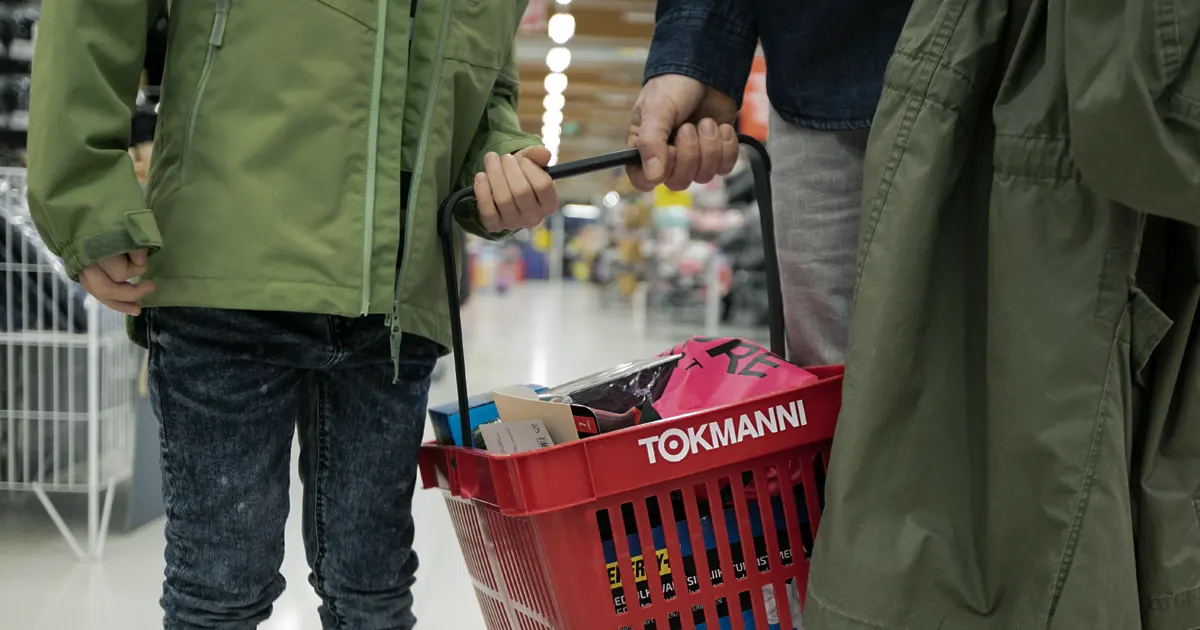
In early April 2026, something happened in Finland that deserves the attention of anyone building retail media, commerce media, or the infrastructure beneath them. Tokmanni — Finland’s largest discount retail chain, with over 370 stores across the Nordics and more than one million in-store visitors every week — opened its in-store digital screen network to programmatic buying. Media agencies can now purchase Tokmanni’s in-store inventory using the same tools and workflows they already use for every other digital channel.

The solution was developed by ReTALE — an agile operator of an open commerce media network and Doohlabs’ partner in building these networks across the Nordics and Europe — together with Tokmanni and IPG Mediabrands, running on the Doohlabs platform. Behind the scenes, Doohlabs connects the retailer’s screen inventory to programmatic marketplaces, enabling audience-based buying down to the individual store and screen level.
What makes this milestone worth paying attention to is not just the programmatic transaction itself. It is the combination of three things arriving in the same place at the same time: an open commerce media network, in-store retail media, and programmatic buying. That combination, delivered together, is rare anywhere in the world — and we believe ReTALE and Doohlabs are, if not the only one, quite possibly the first retail media actors to put all three into live production.
An open commerce media network + in-store retail media + programmatic buying — delivered together, in live production. That is the combination the industry has been gesturing at for years, and rarely actually shipped.
Most retail media networks today are single-retailer constructs: one chain, one sales team, one inventory set, one commercial model. That works, but it caps the opportunity. The advertiser has to stitch together many separate relationships to reach the audience they actually want, and the retailer has to carry the full cost of building sales, tech, operations, and data capabilities on their own.
An open commerce media network flips that model. It brings multiple retailers — and, just as importantly, consumer-facing businesses from adjacent verticals with valuable audiences — together under a shared commercial and technological framework. Instead of every organization building its own standalone RMN from scratch, they plug into an ecosystem that already has the sales motion, the platform, the measurement, and the advertiser relationships in place.
ReTALE is exactly that: an open commerce media network designed from day one to be multi-retailer, multi-vertical, and multi-channel. It is, from everything we see in the market, the first of its kind — an operator genuinely built around the idea that the network should be open rather than captive to a single retailer. That design choice is what makes a programmatic announcement like Tokmanni possible in the first place. You can only automate buying at scale on top of infrastructure that was built to be shared.
Doohlabs and ReTALE have been building the network together. ReTALE operates the commercial layer: sales, packaging, pricing, advertiser relationships, campaign delivery. Doohlabs provides the platform that makes all of it run — with a particular focus on in-store retail media, which is our home ground and, for most retailers, the single most valuable channel in their mix.
The whole stack — from inventory modelling to bid handling to measurement — has to be purpose-built. That is what we have spent years building. Doohlabs is designed to support all three sales motions an open commerce media network needs — direct, self-service, and programmatic — and to do so at the store and screen level of granularity that in-store retail media actually requires.
The Tokmanni launch is the first live proof that the pieces work together in a demanding environment.
The Tokmanni announcement is genuinely significant — not because programmatic will immediately replace other buying models, but because it proves the lane exists and works. Retailers and network operators need to understand that programmatic is not the destination. It is one lane in a three-lane road.
Direct media sales will remain the commercial backbone for years. Self-service unlocks advertisers that a sales team would never reach, and scales in ways a sales team cannot. Programmatic connects the inventory to the automated buying infrastructure that agencies increasingly use as their default — and as agentic buying becomes more widespread, where AI systems make media decisions autonomously, a programmatic pipeline shifts from a competitive advantage to a basic requirement.
All three models coexist. Direct and self-service generate the majority of revenue in an open commerce media network. Programmatic complements and extends. The operators that win build for all three from the start — which is exactly how the ReTALE–Doohlabs stack has been designed.
The significance of this announcement is not that one retailer turned on programmatic for one channel. It is that an open commerce media network now runs in-store retail media programmatically in production — which is the combination the industry has been gesturing at for years and rarely actually shipped.